



 Telephone : 400-123-4567
Blogpost keywords: blue french country lampshades, blue lampshades wholesale, custom blue lampshades
In décor collections, blue french country lampshades sit at a valuable intersection: classic enough to feel timeless, soft enough to feel calming, and distinctive enough to stand out in retail displays. For B2B buyers, the opportunity is real—but so is the risk. Blue is one of the most batch-sensitive colors, and French country styling depends on believable, muted tones and natural textures rather than bold saturation.
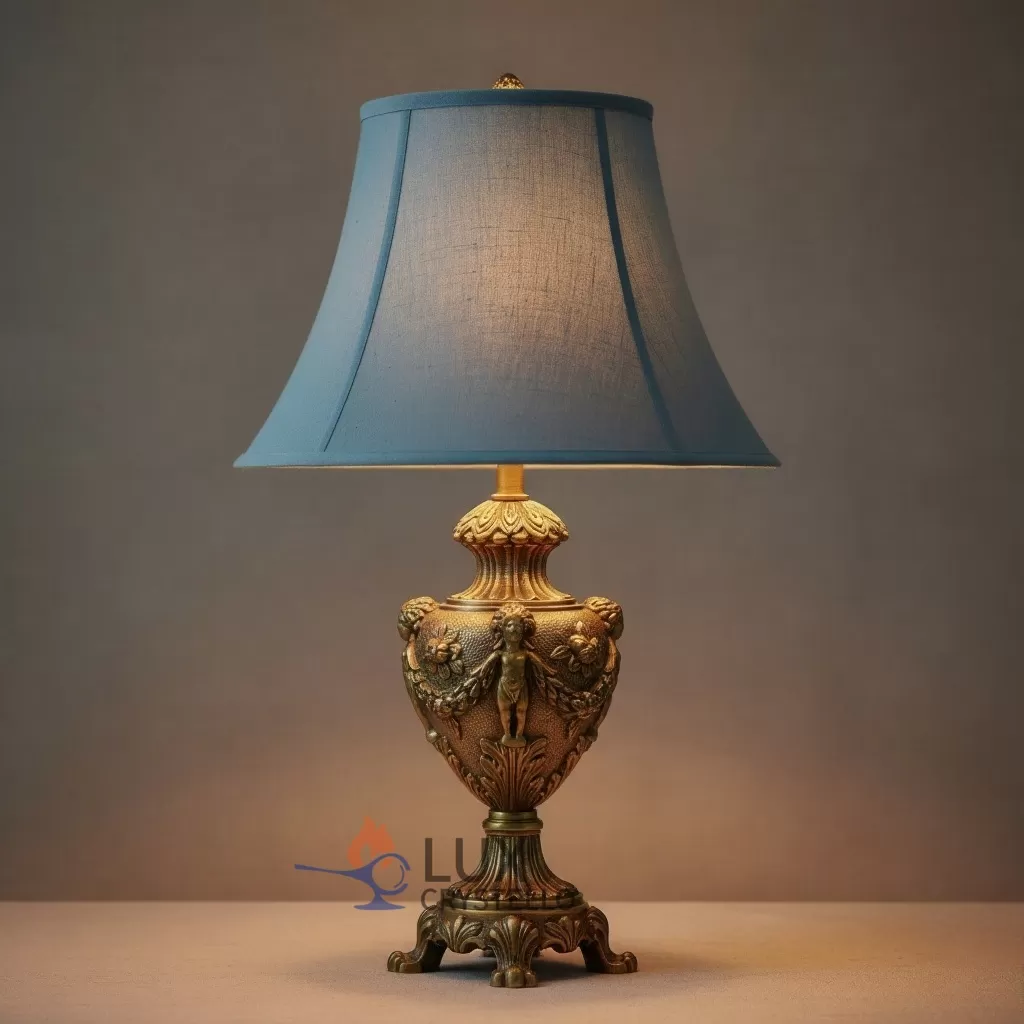
This guide focuses on how professional buyers evaluate samples, control blue tone consistency, and source blue french country lampshades that perform reliably in wholesale and project environments.
What Defines High-Quality Blue French Country Lampshades
High-quality blue french country lampshades succeed on three levels: aesthetic fit, lighting performance, and reorder stability. From a style perspective, French country favors natural-looking fabrics such as linen or cotton blends, subtle texture, and relaxed detailing. Glossy finishes or overly vivid blues tend to feel out of place.
Technically, a well-made shade should hold its shape, sit level on the lamp, and show clean seams and edges. Blue tones highlight imperfections more than neutrals—misaligned trims, uneven tension, or a slightly oval rim are easier to spot. Reliable suppliers treat shape control and finishing consistency as baseline requirements, especially for blue lampshades wholesale programs.
Choosing the Right Blue: Undertones, Patterns, and How Color Reads When Lit
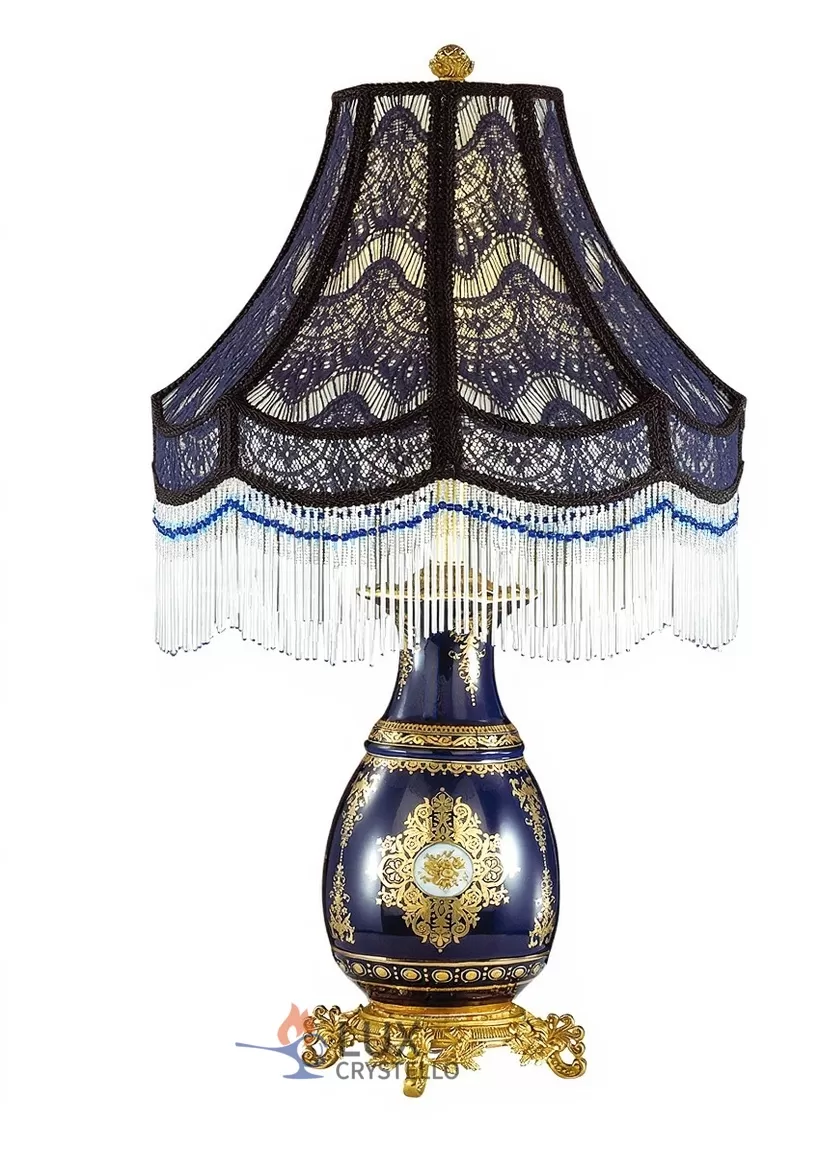
"Blue" is not a single color but a spectrum. For French country interiors, the most commercially stable options are dusty blue, grey-blue, soft denim, and muted navy. These tones feel calm and integrate easily with warm woods, aged metals, and neutral upholstery. Brighter or cobalt-like blues often read too modern unless paired with very rustic textures.
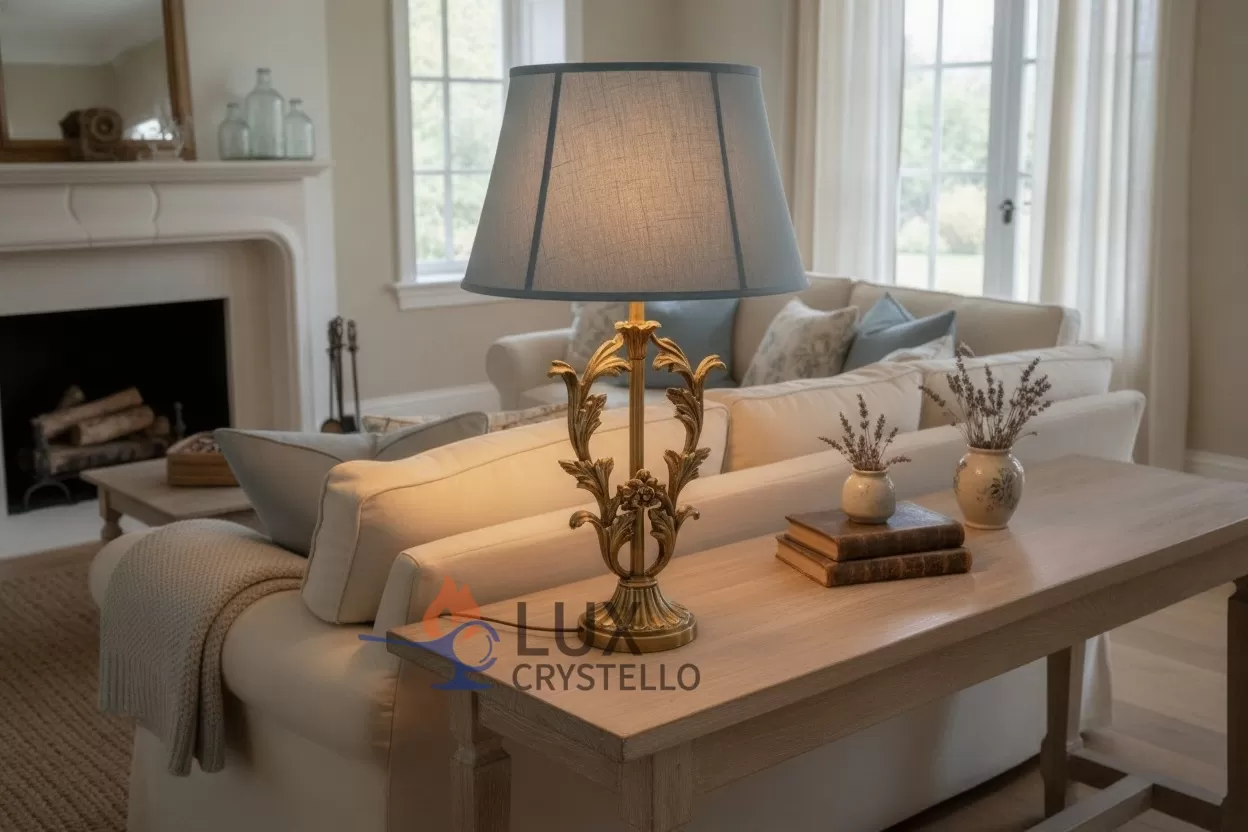
Undertones become critical once the lamp is turned on. A fabric that appears slate blue in daylight may shift greener or colder under warm bulbs. Buyers should request both "lamp off" and "lamp on" photos using a consistent bulb temperature. When building assortments of blue french country lampshades, many buyers split the range into two lanes: a lighter dusty/duck-egg blue and a deeper indigo or navy, allowing flexible use across bedrooms and living spaces.
Pattern scale also matters. Ticking stripes, small florals, and soft toile-inspired motifs work well, while large, high-contrast prints can overwhelm the relaxed French country look and limit cross-market appeal.
Materials and Build Quality: Fabric, Lining, Frame, and Diffusion
Material choice affects both appearance and performance. Tighter fabric weaves usually hold color more evenly and look cleaner, while heavier slub textures add rustic character but can introduce visible variation in blue tones. For custom blue lampshades, buyers should decide early whether variation is a feature or a defect.
Lining quality strongly influences light diffusion. Good lining reduces hotspots, minimizes frame shadows, and helps the shade glow evenly at night. It also supports long-term shape retention. Frame construction matters as well—welded, coated metal frames resist deformation during storage and shipping, reducing ovaling and uneven rims common in blue lampshades wholesale distribution.
Finishing details deserve close inspection. Seam straightness, trim alignment, and clean edges are where "handcrafted charm" can easily cross into inconsistent manufacturing if QC standards are unclear.
B2B Sourcing Checklist for Blue Lampshades Programs
For wholesale and project buyers, consistency should be formalized—not assumed. Start with a physical "golden sample" that defines approved color, fabric texture, and shape. Confirm how suppliers manage dye lots, fabric sourcing, and batch checks. For custom blue lampshades, clarify whether dye recipes or fabric sources can be locked for future reorders.
Packaging deserves special attention because dents show easily on colored shades. Buyers should specify rim protection, internal supports, separators, and reinforced cartons for export. QC should include shape symmetry checks and quick inspections under light to catch streaking or uneven diffusion before shipment.
FAQ — Blue French Country Lampshades
Q1: Which blue tones sell best for French country interiors?
Dusty blue, grey-blue, and muted navy tend to perform well because they feel calm and pair naturally with warm woods and neutral décor.
Q2: How do suppliers control color consistency across batches?
By managing dye lots, keeping fabric sourcing stable, and matching production to an approved physical reference sample.
Q3: Can buyers develop exclusive collections with custom blue lampshades?
Yes. Custom blue lampshades can include specific tones, trims, shapes, and fitters, usually with defined MOQ and sampling steps.
Q4: What affects MOQ in blue lampshades wholesale programs?
MOQ depends on fabric availability, color complexity, size range, and whether the shade is a standard or custom design.
Q5: How should blue lampshades be packed for export?
Rim protectors, internal supports, separators, and reinforced cartons help prevent dents, scuffing, and compression damage.
Conclusion: Positioning Blue French Country Lampshades for Repeat Success
Blue french country lampshades succeed commercially when tone accuracy, comfortable light diffusion, and reorder consistency are treated as priorities. By choosing the right undertones, approving samples under real lighting, and enforcing packaging and QC standards, buyers can turn blue shades into dependable, repeat-performing SKUs for retail and interior projects.
Sourcing Blue French Country Lampshades for Your Line
If you are planning a shade assortment, share your preferred blue undertone, target price tier, and fitter requirements. With a clear approval process and tight QC, blue french country lampshades can become a stable, repeatable category within your retail or project offering.
400-123-4567
138-0000-0000